
An Introduction to Identity

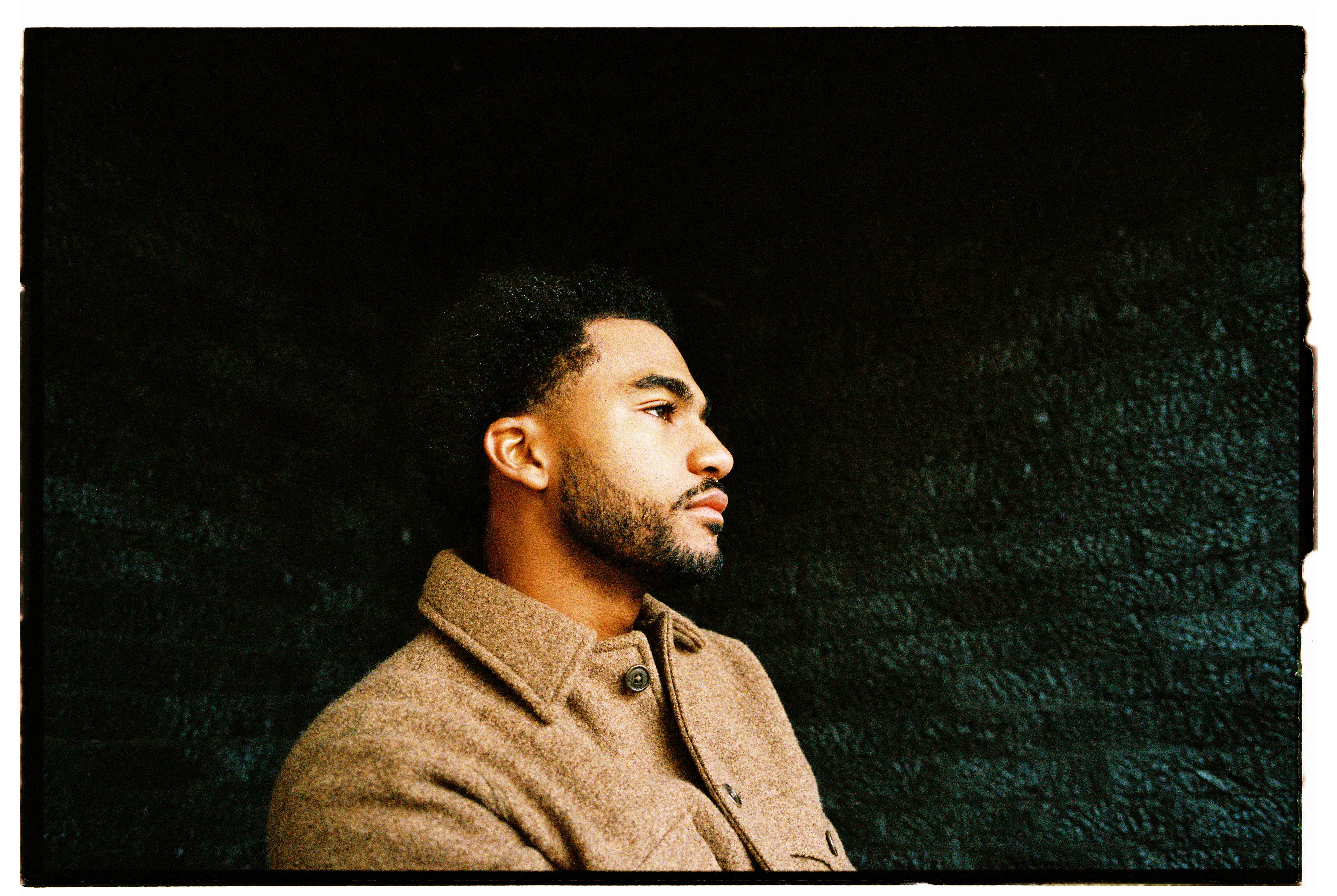
I never gave myself the name “Caz”.
The given nickname does not even accurately stem from Caziah (pronounced Kuh - zai - uh).
It was born out of convenience the summer of 2017 while on a mission trip in Haiti with a church I attended at the time in Arlington, TX; a church that played a vital role in the early beginning of my spiritual formation journey. However, this was not the church that I grew up attending throughout my youth.
I grew up attending a church in Oak Cliff, TX that has been renowned for its seasoned wisdom and spiritual legacy. A church that has been a tremendous blessing towards my family. This is also the first place [and church] where I experienced internal racism, and identity confusion as a young black boy. The climate of this primarily black church differed from the extreme lack in diversity at the private school I was attending, in which I was one of six black students (86 total) in my graduating class from pre-k all the way to my senior year. The lack of relatability and social tug-of-war in my environments formed this seemingly benign tumor of racial identity. I felt too black for my white peers, and too white for my black peers. In both of these spaces I had to correct the pronunciation of my name when read from attendance sheets, or correct it when Microsoft Word underlined it in red. What furthered my identity struggle was the fact that I was, indeed, a weird kid with (at the time) weird interests. My white peers were focused on keeping up with their fantasy football teams and playing ‘Call of Duty’, and my black peers focused more on being cool and ‘one-upping-each other’ with trends and lingos. I, however, spent my free time bingeing ‘How It’s Made’ on The Science Channel, listening to Watercolors on SiriusXM, and watching camping and ‘bushwhacking’ videos on YouTube.
As love and empathy began to form inside of me, the lack of relatable and shared interests seemed less and less important. I played FIFA and Madden even though I sucked and did not personally own sports games. I joined sports teams and air soft/paintball leagues with my peers because my love for athletics and comradeship was much stronger than my desire for competition, and my unfailing love for all genres of music became the connecting language that bridged the racial-gap. During this intersection however, learning how to “be myself” became really hard, and in some cases a burden. I gave my time to so many things in efforts to be liked and accepted, and the line that divided my personal interests and ‘cross-over’ interests became no longer distinguishable. In hindsight, this sounds like a beautiful merger, and in most cases it was. But this lack in personal identity made manipulation (as well as self-manipulation) more feasible than ever. I lacked confidence in who I was as an individual, and allowed the things that made up my time speak on my behalf.
One major reason I deeply cared about being liked among my peers was because of the family I came from. It was vital to me that individuals got to know and like me for me, and not know and like me for the last name that became a thorn in my eye.
I grew up walking into most rooms with the assumption that everyone had already made up their mind about the kind of man I was because of my last name. These assumptions only grew as I continued to hear statements like: “Oh you aren’t a douchebag at all!” or, “Oh so you’re like, normal!”. What does normal even mean? To this day I personally feel that most individuals have some misconceptions about how it truly feels to live within the shadows of fame. Some individuals have coined the term ‘nepobaby’, and to those who include this title within their quiver of labels and tags, I won’t fight them on it. However, this idea - the thought of becoming a ‘nepobaby’ became a deterrent in my life. I spent 90% of my energy daily ensuring that I would never live up to that title. This focus became the leading factor in all of my decision making for years. Sometimes everyone assumed that I had the answers to everything because of my proximity to business, so I’d speak up. But, if I knew the truth would be crushing in spirit, come across too rational, or make others look down on me, I kept my silence. I respect those who mistook this ‘discernment’ as wisdom, but wise is the furthest thing I’d call myself during that season of life.
During that season, my sophomore year of high school, I was invited by senior students to help launch a student-led ministry in Arlington which I joined eagerly. I began attending their church, which became the ministry’s foundation and the church I later traveled to Haiti with. The ministry expanded rapidly, reaching over five schools, with weekly leadership meetings held in my family’s studio conference room. Over time, I developed a belief that I was just a resource, with very little authority - a lie that deepened as we planned our biggest event, fueled by a timely visit from a potential donor. Though I had my reservations, I stayed silent out of fear of judgment. That event, however, turned out to be the ministry’s final one. My silence only became self-deprecating as I began launching myself at every opportunity that allowed me to aid and serve. I cared more about being liked and appreciated rather than recognizing and utilizing the authority I was given.
The summer of that same year, I was invited on the mission trip to Haiti as a member of the worship and prayer team. Without hesitation, I accepted the call to action. It never dawned on me that I would be the only black student in my group until we got to Haiti and spent time in the villages. While spending time in one of the villages with my outreach group, I noticed a Haitian man studying me sharply.
“Who are you from?”, he asked in Creole.
“Texas”, I replied in my southern American accent.
“No, who are you really from?”.
I had never been asked that question before. The man studied my caramel skin and ambiguous features. He made a gesture that I interpreted as disgust towards my braided up hair (that I was experimenting with at the time). The Haitian man had a hard time believing that I was in fact, black. This interaction quickly served as a somber feeling deja vu from my early childhood days of not seeming to fit in with both race and interest.
“What is your name?”, he asked in Creole.
“Caziah”.
After a long hard battle of pronunciation, he settled on the name, “Caz”.
A name I settled on for the remainder of the mission trip.
A name I then settled on in life.
There is something interesting and powerful about a name and its meaning, especially when given a name from another tongue. But there is something defeating and almost disheartening about being given a name born from a posture of judgement. The very thing that you’d think would be the connecting bridge for this Haitian man and I, was actually the very thing that disconnected us. But “Caz” I became, and “Caz” I allowed myself to remain. The name continues to slip off my tongue as acceptance and has become second nature. And I correct to “Caziah” whenever I feel brave enough.
My true name, Caziah, rings like fire to my ears when heard…imposter syndrome being the primary feeling that comes up.
The name “Caziah” (originally spelled Keziah) originates from the book of Job in the old testament. Caziah was the second daughter restored to Job after his devotion to the LORD during the testing of his faithfulness. The name means strength, resilience, and the ability to withstand challenges.
“Caz” was a name given to me out of a convenience that I acquiesced to. And it is a name that I accepted and even branded. But I truly believe that we are not called to convenience on this side of heaven. We are called to be resilient, able to stand strong within times of weakness, inhibition, and even disheartenment. My wife, Alena, is the first to say that I tend to wear my heart on my sleeve. However, she has also gently nudged that this is the year that I learn to develop thicker skin. The name, “Caziah”, is the armor that has been missing from my artillery.
Reader, I don’t know what your name is, nor do I know what you are called or what name you have accepted from the world. But please remember that we are not known or called by the things that we do. We are not known or called by the groups that we are a part of or the feats that we accomplish in pursuits of acceptance. For all of these things are fleeting, and replaceable. The thing that can never be replaced, is the power of your name, and the weight that it holds.
Some people still call me Caz, and to those who do, please know that I do not hold any animosity nor take offense as that is how I introduced myself.
But if you would allow me to re-introduce my identity,
My name is Caziah Rashad Franklin, and it’s nice to meet you.
Thank you brother for sharing. You helped to put words to my own thoughts and feelings carried from my youth up until today.
Your name indeed represents what I have in Christ, and is what I needed to hear today.
I am looking forward to the “sharpening of our iron”.
Bless you bruh♥️💪🏿♥️
What a great read! Thanks for trusting us with your story while allowing your pen to flow. Identity is so complex, but isn't it beautiful to catch glimpses of your layers and development in time?